
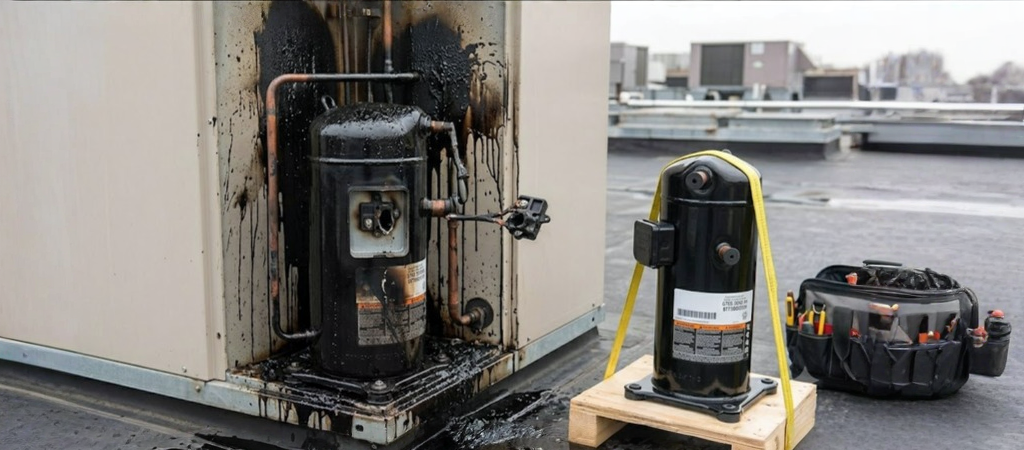
As a property owner, managing your building’s infrastructure can feel overwhelming, especially when it comes to heating and cooling. If an HVAC technician has ever told you that your compressor is “burnt out,” you already know it is one of the most expensive and disruptive failures a system can experience.Think of the compressor as the heart of your entire HVAC system. Its job is to pump refrigerant through the lines to keep your indoor spaces comfortable. When it burns out, the system stops working completely, leaving you with an emergency repair or a complete system replacement.At American HVAC Corp, we believe the best repair is the one you avoid. Serving all five boroughs of New York City—including Manhattan, Brooklyn, Queens, The Bronx, and Staten Island—our local field teams have put together this practical guide to help you identify hidden system strains and protect your equipment before a breakdown happens.
6 Vital Areas to Monitor to Protect Your HVAC Compressor
HVAC compressors rarely fail out of nowhere. They usually break down because a smaller, unaddressed issue forced the motor to work outside its safe limits. Use this guide to understand the six most common culprits behind compressor burnout.
1. Electrical Controls and Contactors
Your compressor requires a clean, steady stream of electricity. Inside the outdoor HVAC unit, a heavy-duty switch called a contactor controls the power flow. Over time, these switches can become pitted, dirty, or scorched from normal electrical arcing. When a contactor fails, it causes voltage imbalances and forces the compressor to pull far too much electricity. This extra current creates intense internal heat that literally melts the protective insulation on the motor wires.
2. Refrigerant Levels and Line Leaks
Refrigerant does not get used up like fuel; it travels in a continuous, sealed loop. If your HVAC system develops a leak, the low refrigerant level starves the system. Crucially, the cool refrigerant gas returning from indoors is what actually keeps the compressor motor from overheating while it runs. Without enough refrigerant, the unit bakes itself from the inside out.
3. Outdoor Condenser Coil Cleanliness
The outdoor portion of your HVAC system contains condenser coils, which vent the heat collected from inside your rooms into the open air. In a bustling environment like New York City, these coils quickly become clogged with dust, soot, and grime. When heat is trapped by a dirty coil, the compressor has to run continuously at dangerously high internal pressures to reject that heat, accelerating mechanical wear.
4. Indoor Airflow and Filter Management
HVAC compressors are strictly engineered to compress gas, not liquid. If an indoor air filter is completely blocked with dust, airflow across the indoor cooling coils drops to zero. This causes the indoor coils to freeze, meaning the liquid refrigerant cannot evaporate into a gas. When that liquid floods backward down the line into the compressor, it shatters the internal mechanical pistons or scrolls instantly.
5. System Running Cycles (Short-Cycling)
The single most stressful moment for an HVAC compressor motor is the exact second it turns on, which requires a massive burst of electrical energy. If your system turns on and off every few minutes—a common problem caused by a faulty thermostat, low-voltage control issues, or an improperly sized system—it creates relentless heat within the motor windings, wearing them down rapidly.
6. Safety Switch Performance
Your cooling equipment features built-in safety devices called high- and low-pressure switches. Think of them like the safety sensors or airbags of your HVAC system. If a system runs out of refrigerant or gets dangerously hot, these switches are designed to shut down operation instantly before permanent damage occurs. If these safety switches are faulty, broken, or bypassed, the system will blindly keep running under destructive conditions until the compressor completely fails.
4.4. Verify Safety Controls: Testing the safety gear.Simulate pressure limits to test high and low safety switches. Ensuring these switches trip exactly at manufacturer specifications keeps a minor airflow or refrigerant issue from destroying the HVAC system.
Frequently Asked Questions
1. What does it actually mean when an HVAC compressor “burns out”?
It means the protective electrical insulation coating the internal motor wires has melted from extreme heat, causing a total electrical short circuit that permanently disables the motor.
2. Can a HVAC technician fix a burnt-out compressor on-site?
No. Once the internal motor shorts out or the mechanical gears seize up, it cannot be repaired. The entire compressor must be completely cut out of the HVAC system and replaced with a brand-new component.
3. Does a burnt HVAC compressor smell bad?
Yes. A severe electrical burnout produces a very strong, sour, and pungent chemical odor that smells like burnt plastic mixed with highly acidic oil.
4. Can a dirty air filter really kill my HVAC compressor?
Yes. A blocked HVAC air filter stops proper airflow, causing the system to freeze up. This sends liquid refrigerant back into a compressor built exclusively for gas, breaking the internal mechanical valves.
5. How long is a quality HVAC compressor supposed to last?
With regular HVAC coil cleaning, air filter replacements, and yearly professional maintenance checks, a high-quality residential or commercial compressor should easily last between 10 to 15 years.
6. Can a summer power surge ruin my HVAC compressor instantly?
Yes. A sudden voltage spike from a lightning strike or a utility grid fluctuation can instantly fry the electrical terminals inside the HVAC compressor in a fraction of a second.
7. Why do commercial HVAC systems have more compressor issues?
Commercial HVAC units are larger and often run on “three-phase” power. If one electrical line drops out while the others keep pushing power, the compressor will rapidly overheat and burn out.
8. Should I replace just the HVAC compressor or the whole HVAC unit?
If your HVAC system is over 10 years old, it is usually much smarter and more cost-effective to replace the whole outdoor HVAC unit rather than placing a costly new compressor into aging infrastructure.
9. How do I prevent a catastrophic HVAC compressor burnout?
The easiest way is to change your air filters regularly and schedule a professional HVAC maintenance tune-up twice a year to keep the coils clean, the safety switches tested, and the electrical connections tight.
10. Why does my HVAC system keep tripping the circuit breaker?
If your HVAC compressor is struggling with mechanical friction or broken electrical insulation, it will pull way too much power from your electrical panel. The breaker trips instantly to prevent an electrical fire.
Professional Care Protects Your Infrastructure
Protecting your heating and cooling equipment takes proper care and technical precision. If you notice weak airflow, strange loud noises, or your HVAC system keeps shutting off out of nowhere, don’t ignore it.Whether your property is located in Manhattan, Brooklyn, Queens, The Bronx, or Staten Island, our EPA and NATE certified HVAC technicians are ready to assist you.
Contact American HVAC Corp today to schedule your regular diagnostic check and keep your HVAC systems running safely all